Home Logo logo
  • The OneDeploy Platform
    • Build vs. Image: The Deployment Revolution
    • Scalability and Performance
    • Remote Sites: Deployment without border
    • A Unified Deployment Platform
  • About OneDeploy
  • For MSP’s
  • News and Events
    • Autopilot is not Deployment
    • OneDeploy Sponsoring Workplace Ninjas, Belgium June 26
    • The Latest OneDeploy Release Simplifies Windows Deployment Across ARM and Intel Devices
    • OneDeploy – The Ideal Successor to MDT
    • Why we killed the image
    • How a London Stadium Recovered from the CrowdStrike Outage in Time for a Concert
    • OneDeploy Sponsoring Modern Endpoint Management Summit, Paris
  • Support and Resources
    • Videos
    • Documentation
  • Contact
Book a Demo
  • The OneDeploy Platform
    • Build vs. Image: The Deployment Revolution
    • Scalability and Performance
    • Remote Sites: Deployment without border
    • A Unified Deployment Platform
  • About OneDeploy
  • For MSP’s
  • News and Events
    • Autopilot is not Deployment
    • OneDeploy Sponsoring Workplace Ninjas, Belgium June 26
    • The Latest OneDeploy Release Simplifies Windows Deployment Across ARM and Intel Devices
    • OneDeploy – The Ideal Successor to MDT
    • Why we killed the image
    • How a London Stadium Recovered from the CrowdStrike Outage in Time for a Concert
    • OneDeploy Sponsoring Modern Endpoint Management Summit, Paris
  • Support and Resources
    • Videos
    • Documentation
  • Contact

Introduction

3
  • What is OneDeploy?
  • Concepts and Planning
  • Getting Started – Technical Onboarding

Using OneDeploy

43
  • Config
    • Windows Autopilot – Getting Started
    • Windows Autopilot Integration – OneDeploy Steps
    • Windows Autopilot Integration – Microsoft Entra
    • Organisations – Summary
    • My Tenant
  • Deployment
    • Builds
    • Devices
    • Deployments
    • Builds
      • Build General Settings
      • Builds Overview
      • Configuring the Operating System(s) for a Build
      • Applying Quality Checks to a Build
      • Configuring the Out of Box Experience
      • Domain and Accounts
      • Assigning Software Packages to a Build
  • Library
    • Library Overview
    • Drivers
      • DriverApps
      • Drivers Overview
      • Drivers Summary View
      • Adding Drivers
      • Driver Properties
    • Operating Systems
      • Adding and Managing Operating Systems
    • Software Packages
      • Software Packaging Best Practices
      • Defining Installation Steps for a Software Package
      • Software Package Steps – PowerShell
      • Software Packages Overview
      • Software Package Steps – Registry (Bulk)
      • Software Package Steps – Registry
      • Software Package Steps – Copy
      • Software Package Steps – MSI
      • Software Package Steps – WinGet
      • Software Package Steps – Execute
      • Software Package Steps – CMD
  • Pre-Deployment
    • Windows PE
    • ADK Versions
    • Boot Profiles
    • Deployment Sources
    • Pre-Deployment Overview
  • Definitions
    • Secrets
    • Software
    • Definitions Overview
    • Device Models
    • Vendors

Reference

7
  • How To: Create USB Boot and Deployment Media
  • How To: Create USB Boot Media
  • Technical Overview – Windows Autopilot
  • Test formatting page
  • How To: Update a build from 24H2 to 25H2
  • How To: Upgrade Your Windows ADK Version
  • LAN-Based vs USB Deployment Sources
View Categories
  • Home
  • Docs
  • Reference
  • How To: Create USB Boot and Deployment Media

How To: Create USB Boot and Deployment Media

3 min read

Overview

The OneDeploy Media Tool allows you to synchronise Deployment Sources and create bootable USB media.

This guide walks through creating a bootable USB memory stick that includes deployment content, enabling full OS deployments without requiring a network connection.

To optimise USB capacity, this example demonstrates how to Filter content so that only specific organisations, builds, and drivers are included.


Prerequisites

  • A configured Deployment Source
  • A valid Boot Profile
  • A USB memory stick (this will be wiped during the process)
  • Sufficient USB capacity for selected content
  • Access to an elevated Command Prompt

Step 1: Create a Downstream Deployment Source (Optional Filtering)

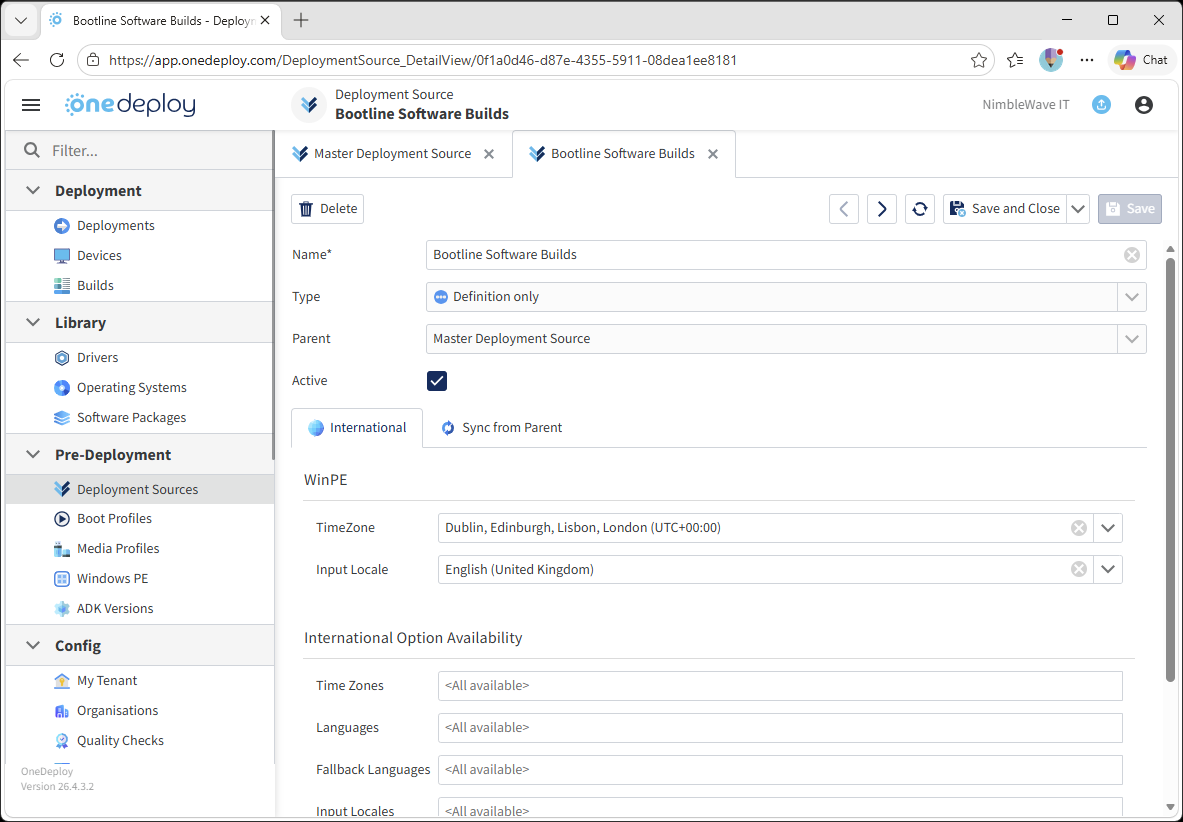
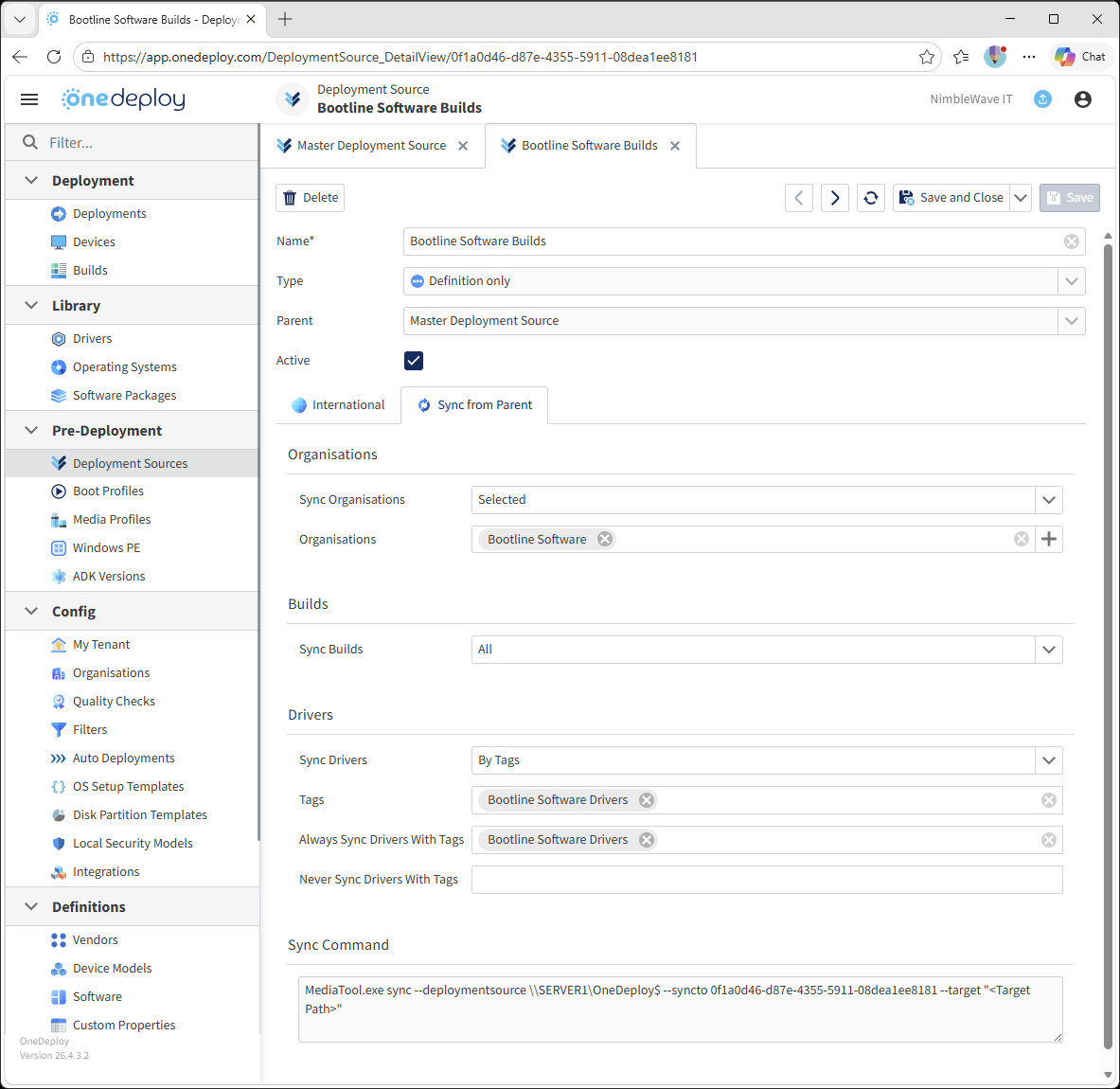
To control what content is copied to the USB, create a Downstream Deployment Source.

  1. Navigate to Pre-Deployment → Deployment Sources
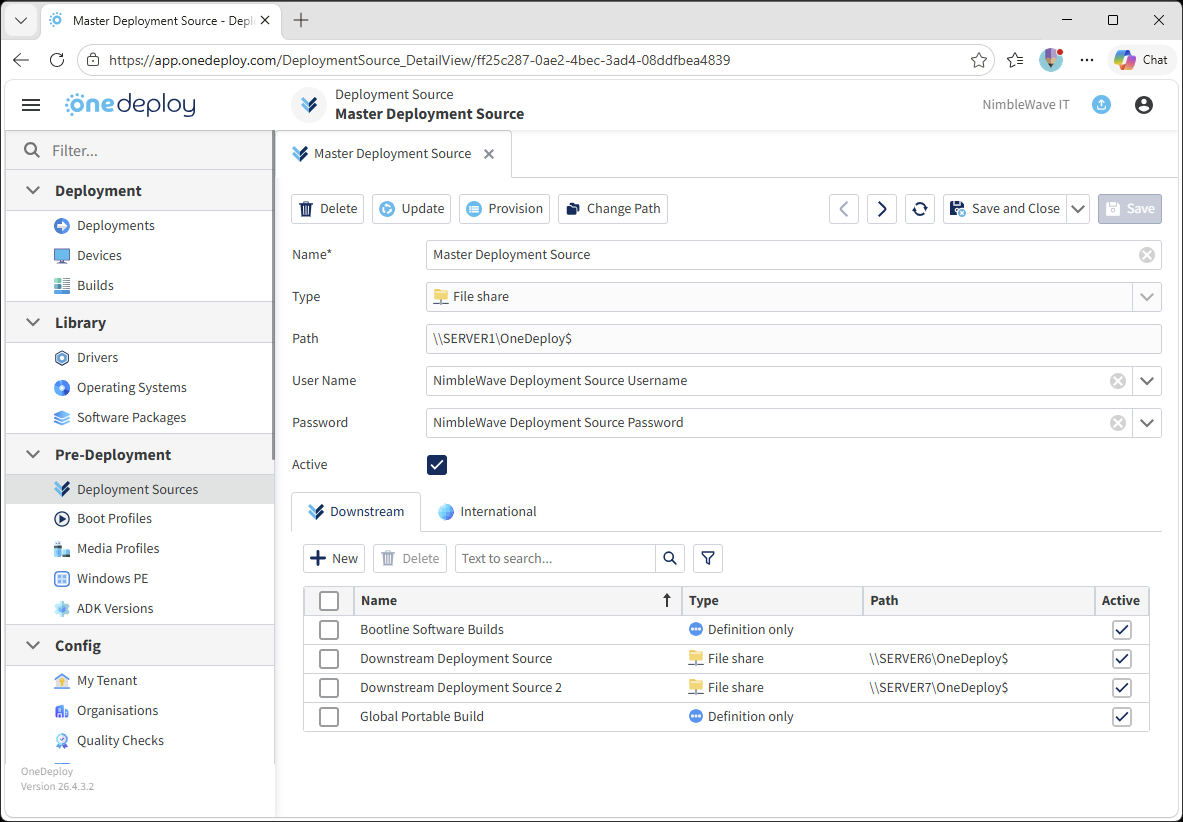
  2. Open your existing Deployment Source (e.g. Master Deployment Source)
  3. Create a new Downstream Deployment Source
  4. Configure the Deployment Source:

    • Enter a Name
    • Set Type to Definition only

  5. In the Sync from Parent tab:

    • Select specific Organisations (for multi-Organisation environments)
    • Optionally Filter:
      • Builds (via Tags)
      • Drivers (via Tags)

  6. Click Save

This step ensures only the required content is included on the USB media.


Step 2: Create a Media Profile

  1. Navigate to Pre-Deployment → Media Profiles
  2. Click New
  3. Configure the Media Profile:
    • Enter a Name
    • Select Architecture (e.g. Intel/AMD 64-bit)
    • Select a Boot Profile
    • Set Mode to Boot and Deploy
    • Set Sync Source From to your Downstream Deployment Source
  4. Go to the Network tab:

    • Set Network Mode to Disabled
      (prevents delays waiting for wired network connectivity)


Step 2: Create a Media Profile

If you have made changes to your Deployment Sources definitions or Media Profiles, ensure you perform a Publish before running the MediaTool.  This ensures the MediaTool has the latest definitions on how to create your USB media.

  1. Go to the Scripting tab in the Media Profile
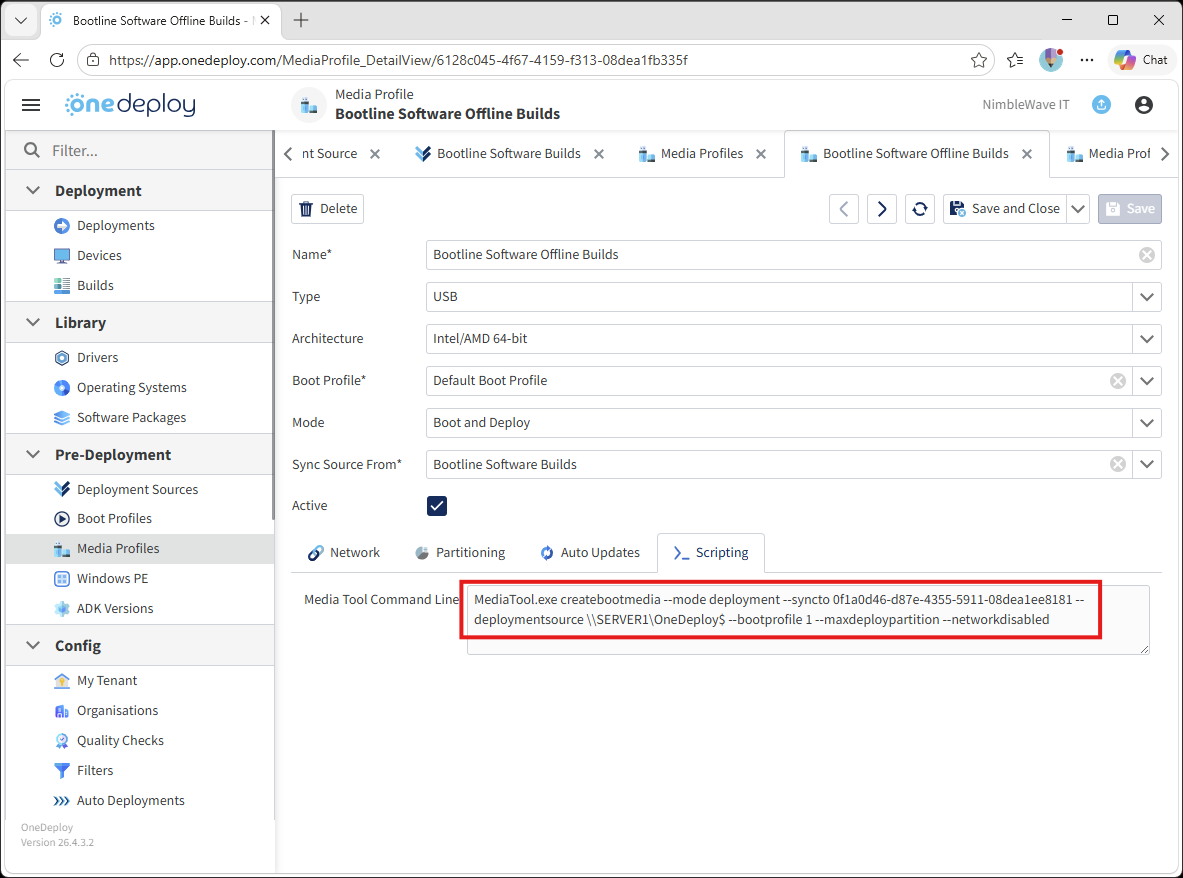
  2. Copy the generated MediaTool command line
  3. Insert your USB memory stick
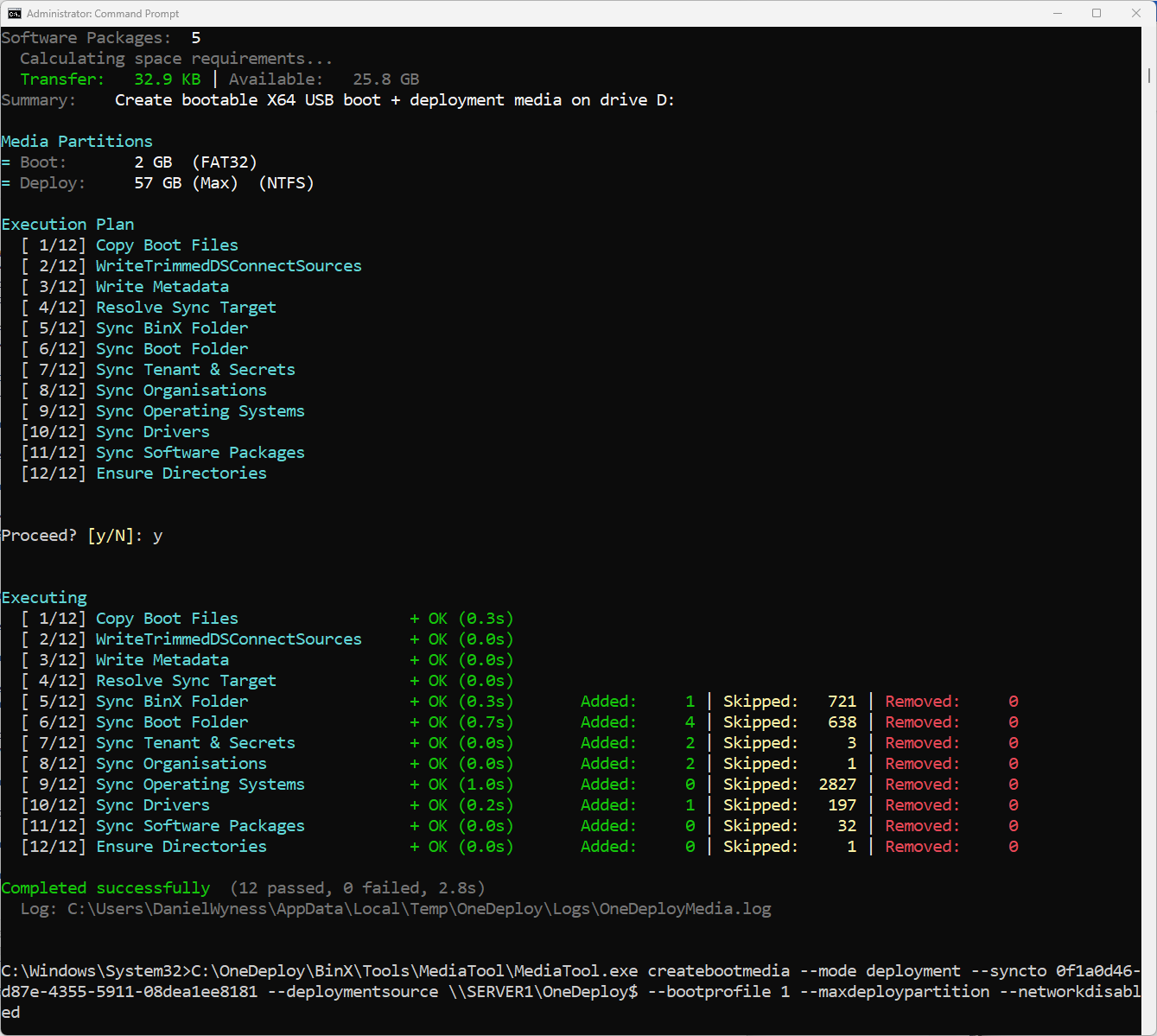
  4. Open an elevated Command Prompt
  5. Run the MediaTool command (with its command line as shown from the Scripting tab)
  6. Select the correct USB disk when prompted
  7. Confirm the operation (this will erase the USB device)
  8. Wait for the process to complete

Result

The USB device is now configured with:

  • Bootable OneDeploy pre-installation environment
  • Operating Systems
  • Drivers
  • Software Packages
  • Build configurations

This allows you to perform fully offline deployments without requiring access to a Deployment Source over the network.


Common Questions

Does this USB require a network connection?

No. With Boot and Deploy mode and Network disabled, deployments can run entirely from USB.


Where is MediaTool.exe located?

MediaTool.exe is located in your Deployment Source:

[OneDeployFolder]\BinX\Tools\MediaTool

Does creating the USB erase the device?

Yes. The process wipes and repartitions the USB drive. Ensure no important data is stored on it beforehand.


Can I include everything instead of filtering?

Yes. You can skip creating a filtered Downstream Deployment Source and use your main Deployment Source, but ensure your USB has enough capacity.


Related Articles

  • How To: Create USB Boot Media
  • Pre-Deployment → Deployment Sources
  • Pre-Deployment → Media Profiles
  • Pre-Deployment → Boot Profiles
Updated on April 30, 2026

What are your Feelings

LAN-Based vs USB Deployment SourcesHow To: Create USB Boot Media
  • hello@onedeploy.com
  • UK:+44 1462 514624/ US:+1 415 907 7314

Copyright 2026 OneDeploy Ltd Privacy Policy Cookie Policy